
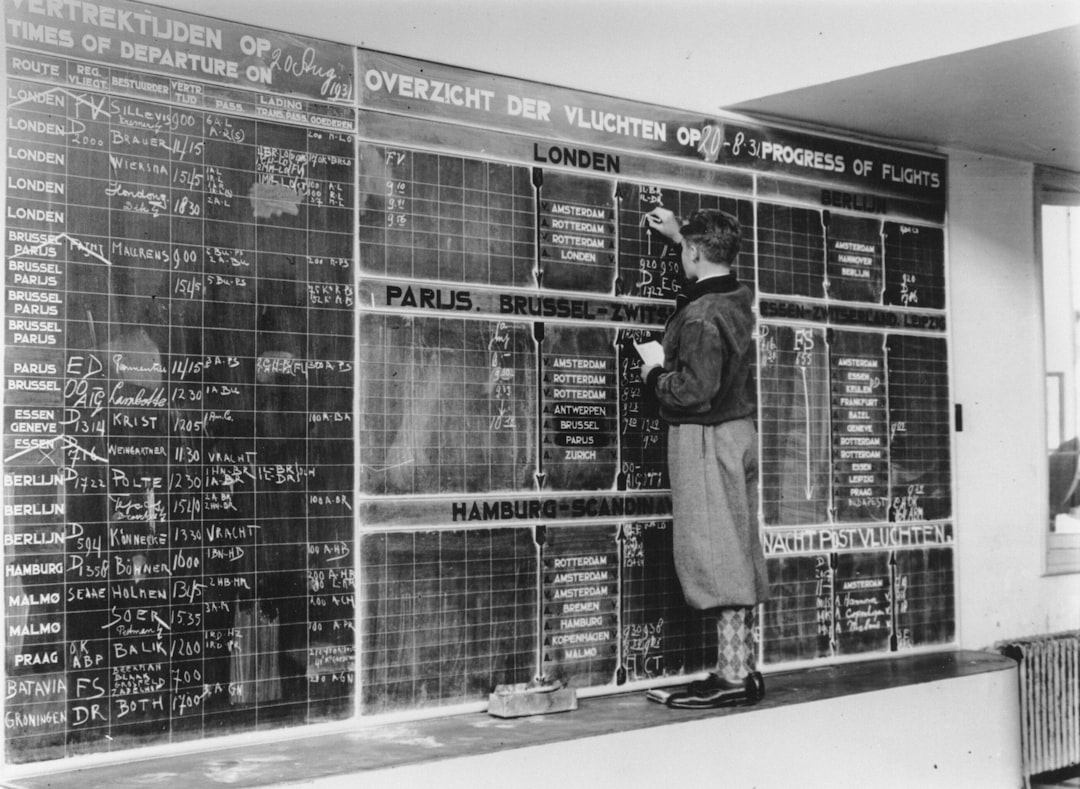
When Sarah, a litigation attorney at a mid-size law firm, received a document discovery containing 15,000 pages of emails, text messages, and financial records, she faced a familiar problem. Her team spent weeks sorting through the material, trying to piece together a chronological narrative of events. Pages were scattered across multiple spreadsheets, some documents were duplicated, and critical timelines were scattered across different team members’ computers. What should have been a three-week organization phase turned into two months of administrative chaos.
This scenario plays out in law offices across the country every single day. Digital evidence management remains one of the most time-consuming and error-prone aspects of modern legal practice. Yet most attorneys continue using outdated methods—spreadsheets, paper documents, and fragmented digital files—to organize the evidence that will ultimately determine case outcomes.
The solution lies in adopting a strategic approach to digital evidence management through the use of legal timeline software. By implementing a structured legal timeline strategy, attorneys can reduce administrative burden by hours, improve collaboration among team members, and present more compelling narratives to judges and juries. This comprehensive guide explores how you can revolutionize your evidence management process and reclaim valuable time for strategic legal work.
Understanding the Digital Evidence Challenge in Modern Litigation
The volume and complexity of digital evidence in litigation have exploded over the past decade. Moreover, the explosion of mobile communication, cloud storage, and business systems has fundamentally transformed how evidence exists in modern cases.
Consider these statistics:
- The average lawsuit generates between 1 to 5 million documents
- Approximately 93% of all new information is now created in digital format
- Legal teams typically spend 50-70% of their time on administrative tasks rather than strategic work
- Document review costs can consume 20-40% of discovery expenses in litigation
Yet despite these challenges, many attorneys still rely on basic tools that were never designed for legal work. Spreadsheets lack the ability to visualize relationships between events. Shared drives create version control nightmares. Email threads become impossible to follow. The result is not just wasted time—it’s missed opportunities to identify key facts, spot inconsistencies, or develop compelling case narratives.
Furthermore, the stakes have never been higher. In a world where evidence presentation can mean the difference between winning and losing, disorganized case files create tangible risk. Judges and juries respond better to clear, coherent narratives. When evidence is presented in a logical chronological sequence, complex cases become understandable. Conversely, when attorneys fumble through disorganized documents or lose track of critical timelines during trial, credibility suffers.
Why Chronological Organization Is Your Secret Weapon
Understanding the power of chronological evidence organization is fundamental to appreciating why legal timeline strategies matter so much. Specifically, the human brain processes information more effectively when it’s presented in sequential order.
The psychology works like this:
- Narrative comprehension – Humans naturally think in stories with a beginning, middle, and end. When evidence is organized chronologically, it aligns with how jurors and judges naturally process information
- Pattern recognition – Seeing events unfold in sequence makes patterns and anomalies obvious that might otherwise go unnoticed
- Causality understanding – Chronological order reveals cause-and-effect relationships that support legal arguments
- Memory retention – Jury members retain information better when presented as a coherent timeline rather than isolated facts
In fact, research in trial psychology demonstrates that cases presented with clear chronological narratives are significantly more persuasive than cases presented as collections of individual facts. A study from Northwestern University School of Law found that story-based case presentations were 29% more likely to result in favorable verdicts compared to fact-based presentations.
Additionally, consider personal injury cases where establishing sequence is critical. If a plaintiff claims certain symptoms developed after an accident, a clear timeline showing medical visits, symptom progression, and treatment dates becomes powerful evidence. Employment discrimination cases similarly depend on timeline analysis—showing a pattern of negative performance reviews following a protected activity conversation requires precise chronological organization.
In contract disputes, intellectual property cases, and commercial litigation, the same principle applies. The party that can clearly show a coherent sequence of events and explain causality typically prevails. Moreover, judges increasingly expect sophisticated evidence presentation. Gone are the days when simply offering documents in evidence sufficed. Courts now expect counsel to explain how evidence fits together and supports the legal narrative.
The Hidden Costs of Disorganized Digital Evidence Management
Before implementing solutions, it’s important to recognize exactly what disorganization costs your firm. Beyond the obvious time waste, poor evidence management creates cascading problems throughout litigation.
The direct costs include:
- Administrative time: Hours spent organizing, re-organizing, and searching for documents
- Error costs: Missed deadlines, overlooked evidence, or inconsistent positions due to information fragmentation
- Collaboration inefficiency: Multiple team members duplicating work because information isn’t centralized
- Discovery disputes: Producing irrelevant documents or missing responsive materials due to poor organization
Yet the indirect costs may be even more significant. When attorneys spend 60% of their time on administrative tasks, they have less time for strategic case analysis. Junior associates spend weeks learning case details instead of developing legal arguments. Client relationships suffer when teams provide inconsistent information. Strategic opportunities get missed because no one has synthesized the evidence into a coherent narrative.
Furthermore, disorganized evidence management creates liability risk. If your firm fails to produce responsive documents because they were lost in an unorganized system, you face sanctions. If you present inconsistent positions because different team members had different understandings of the facts, credibility collapses. Indeed, ethical obligations require competent representation—which increasingly includes competent technology use.
Consider the cost in lost leverage. In settlement negotiations, the party that can quickly produce organized, compelling evidence demonstrating their position gains enormous advantage. Conversely, if you fumble around looking for specific documents or struggle to explain your factual narrative, opposing counsel gains leverage.
Building Your Legal Timeline Strategy: A Practical Framework
Creating an effective legal timeline strategy involves more than simply listing events in chronological order. Instead, it requires a systematic approach that captures relevant context and enables sophisticated analysis.
Step 1: Identify Relevant Events and Evidence
The foundation of any timeline strategy is determining which events matter. Not every email or interaction deserves inclusion. Instead, focus on events that meet your case themes and legal requirements.
Key events typically include:
- Contractual milestones (signing dates, performance dates, breach dates)
- Communications that establish knowledge, intent, or reliance
- Actions and inactions by parties
- Causally relevant events
- Damages-establishing events
For instance, in an employment discrimination case, relevant events might include job performance evaluations, salary decisions, promotional opportunities, and comments made by decision-makers. Meanwhile, the plaintiff’s personal life events, while they might inform damages, are less relevant to causality questions.
Additionally, think strategically about event selection. Your timeline should support your legal theory. If you’re arguing that a company systematically excluded women from leadership roles, your timeline should include every promotion decision for the relevant time period, showing the pattern. If you’re arguing that someone’s actions were reasonable under the circumstances, your timeline should show what information they had at each relevant moment.
Step 2: Gather and Verify Source Documentation
Every timeline entry should be sourced to actual evidence. Second, establish a system for documenting which original materials support each timeline event.
This verification process serves multiple purposes:
- Accuracy assurance – You can point to actual evidence, not subjective interpretation
- Trial readiness – You can immediately produce the evidence supporting any timeline fact
- Dispute prevention – Opposing counsel cannot later argue about whether specific facts are established
- Credibility – Judges and juries trust detailed evidence-based presentations
As you gather documentation, create a source document database showing how each piece of evidence relates to timeline events. This becomes invaluable during trial when you need to quickly reference supporting documents.
Step 3: Create Multiple Timeline Views
Effective timeline strategy recognizes that different audiences need different perspectives on the same events. Subsequently, create multiple timeline views highlighting different themes or aspects.
For example, you might create:
- Chronological master timeline – All events in sequence
- Theme-based timelines – Events organized around key legal theories
- Party-by-party timelines – Showing what each party did and knew
- Document flow timelines – Showing how information moved between parties
- Decision-making timelines – Showing steps leading to key decisions
This multi-perspective approach enables you to tell different stories for different audiences while maintaining factual consistency. Your trial presentation might emphasize one timeline, while settlement negotiations emphasize another, yet both remain grounded in the same underlying facts.
Step 4: Integrate Visual Elements
The human brain processes visual information approximately 60,000 times faster than text. Therefore, visual timeline presentation is not optional—it’s essential.
Effective legal timeline visualization includes:
- Color coding – Different colors for different parties, types of events, or case themes
- Icons and symbols – Visual indicators for different event categories
- Highlighting – Emphasis on particularly important events or evidence clusters
- Spatial representation – Showing relationships and gaps in evidence
Moreover, visual timelines serve multiple functions. During client meetings, visual timelines help clients understand case narratives and see why legal strategy makes sense. During settlement negotiations, visual evidence of a clear pattern can motivate settlement. During trial, visual timelines help jurors follow complex narratives. And during internal team meetings, visual organization ensures everyone understands the case the same way.
Implementing Technology Solutions for Evidence Management
While the strategic framework above applies regardless of tools used, implementing technology dramatically improves efficiency and effectiveness.
Traditional approaches—spreadsheets and paper—have fundamental limitations. Spreadsheets lack visualization capabilities and become unwieldy with more than a few hundred entries. Paper timelines cannot be easily updated, shared, or searched. Email chains about timeline details scatter information across multiple inboxes. Each team member might have a different version.
Modern legal timeline software addresses these limitations directly. Specifically, cloud-based legal timeline platforms enable attorneys to:
- Organize evidence centrally – All case information in one searchable system rather than scattered across devices and folders
- Attach supporting documents – Link timeline events directly to source evidence, emails, images, and other exhibits
- Enable real-time collaboration – Multiple team members contribute simultaneously without version control problems
- Create professional visualizations – Generate compelling timeline graphics suitable for trial presentation
- Filter and search intelligently – Quickly locate specific events or evidence within complex cases
- Update efficiently – Modify timelines as new evidence emerges and automatically propagate changes to all users
Tools like TrialLine specifically address legal timeline needs in ways general-purpose software cannot. Rather than forcing attorneys to adapt spreadsheet or project management tools to legal work, purpose-built legal timeline software includes features developed specifically for case management needs. Cloud-based accessibility means attorneys access timelines from anywhere—courtrooms, client meetings, depositions—ensuring information is always at hand.
Furthermore, the document integration capabilities eliminate the fragmentation problem entirely. Instead of searching through email for a critical message or document, attorneys attach evidence directly to timeline events. This creates a unified information repository that maintains context and relationships.
Advanced Strategies for Complex Litigation
As cases grow more complex, timeline strategy must evolve accordingly. Large commercial disputes, patent litigation, and multi-party cases require sophisticated evidence management approaches.
Managing Multiple Parties and Perspectives
In complex litigation, different parties have different knowledge, take different actions, and follow different timelines. Subsequently, your timeline strategy should reflect these distinct perspectives.
For instance, in construction defect litigation, the contractor, subcontractors, engineer, and owner all have relevant timelines. The owner’s timeline might focus on when problems became apparent and when notices were given. The contractor’s timeline might show when they discovered problems and what remedial steps they took. The engineer’s timeline might highlight inspections and communications. An effective timeline strategy captures all these perspectives while maintaining chronological coherence.
Additionally, cross-party timeline analysis reveals communication gaps, delays, and inconsistencies that prove critical at trial. When the contractor claims they didn’t know about a problem until date X, but the owner’s emails show notification on date Y-30, timeline comparison immediately spotlights the inconsistency.
Handling Voluminous Document Production
When discovery generates thousands or millions of documents, organizing them into meaningful timelines becomes genuinely challenging. Nevertheless, strategic document sampling and analysis reduces complexity without sacrificing accuracy.
Effective approaches include:
- Key custodian sampling – Focus timeline development on documents from key decision-makers first
- Thematic prioritization – Build timelines around case themes rather than attempting to include every document
- Automated filtering – Use software to identify documents containing temporal markers or relevant keywords
- Collaborative sorting – Assign document review team members to specific time periods or subjects, ensuring faster, more organized processing
The goal is creating comprehensive yet manageable timelines that capture essential facts without drowning in peripheral information. Moreover, this focused approach often reveals patterns faster than attempting comprehensive review from the outset.
Building Narrative Chains
Beyond simple chronological listing, sophisticated timeline analysis identifies chains of causality and narrative sequences that support legal arguments.
For example, in a fraud case, you might identify this sequence:
- Defendant received information establishing their knowledge (date and document)
- Defendant failed to disclose despite legal obligation (date and evidence)
- Plaintiff relied on omission to their detriment (dates and evidence)
- Plaintiff suffered damages (evidence and calculation)
Each element links to specific evidence, creating an unbreakable narrative chain. During trial, walking through this sequence with exhibits proves fraud more effectively than isolated facts ever could.
Frequently Asked Questions About Legal Timeline Strategy
How much time can effective timeline management actually save?
Research suggests that effective evidence organization reduces administrative time by 40-60%. For a litigation team spending 1,000 hours on case administration annually, that represents 400-600 hours recovered for strategic work. At typical billing rates, that’s $100,000-$300,000 in recovered productivity annually. Even accounting for the time spent on initial timeline development, the return on investment is substantial.
Can timeline software work for solo practitioners or small firms?
Absolutely. In fact, small firms often see the greatest benefit because they lack support staff to manage evidence organization. When one attorney must wear all hats, tools that automate evidence management are particularly valuable. Cloud-based solutions scale from solo practitioners to large firms without requiring IT infrastructure investment.
What happens when new evidence emerges during litigation?
Quality timeline software allows easy updates. New evidence simply gets added to the timeline, automatically maintaining chronological order and updating all views. The system maintains version history, showing what changed and when, which proves valuable during discovery disputes about timing.
Can opposing counsel challenge timeline accuracy?
Only when the timeline misrepresents evidence. If every timeline entry is sourced to actual evidence and can be supported with documentation, opposing counsel’s challenges fail. In fact, your evidence-based approach forces opposing counsel to do the same, improving case quality overall.
How do you handle inconsistencies or gaps revealed by timeline analysis?
Timeline analysis often reveals inconsistencies (contradictory statements), gaps (events without explanation), and suspicious timing patterns. Rather than hiding these, address them directly in your legal strategy. Sometimes inconsistencies can be explained or contextualized. Sometimes they reveal credibility problems you need to anticipate. The key is identifying them proactively rather than having opposing counsel surprise you with them at trial.
Maximizing Timeline Impact at Trial
Timeline strategy ultimately culminates in trial presentation. Consequently, developing timelines with trial presentation in mind improves their entire utility.
Consider these trial presentation principles:
- Simplicity over complexity – Use timelines that juries can immediately understand, adding complexity only when essential
- Color strategy – Use colors strategically to highlight themes; random colors distract rather than help
- Movement and animation – Animated timelines that build events sequentially engage juries better than static displays
- Print alternatives – Prepare both electronic and printed versions for situations where technology fails
- Expert integration – Ensure expert witnesses can reference and explain timeline elements effectively
Additionally, practice timeline presentation extensively. Smooth, confident timeline explanation signals credibility. Fumbling around looking for exhibits or struggling to explain timeline logic undermines your case. The more you’ve practiced presenting timelines, the more natural and compelling your trial presentation becomes.
Conclusion: Transforming Evidence Management Into Strategic Advantage
Digital evidence management no longer requires attorneys to choose between thorough organization and time efficiency. Modern legal timeline strategies, particularly when implemented with purpose-built software like TrialLine, enable comprehensive evidence management that actually saves hours while improving case quality.
The transformation begins with recognizing that timeline strategy is not a trial preparation afterthought—it’s a foundational case management approach that benefits every phase of litigation. From discovery through settlement to trial, organized, accessible timelines drive better decisions and faster workflows.
To implement an effective legal timeline strategy:
- Start now – Don’t wait until trial preparation; begin timeline development early when time pressure is lowest
- Involve your team – Collaborative timeline building ensures comprehensive coverage and team alignment
- Prioritize key events – Focus on events that matter to case themes rather than attempting to include everything
- Source everything – Connect every timeline entry to actual evidence, not interpretation
- Leverage technology – Use tools designed for legal timeline management rather than adapting general-purpose software
- Update continuously – As new evidence emerges, update timelines immediately to maintain accuracy
- Prepare multiple views – Create different timeline presentations for different audiences and strategic purposes
If your firm currently relies on spreadsheets, paper, or email for evidence organization, the opportunity for improvement is enormous. Consider exploring legal timeline software that can streamline your evidence management process. TrialLine specifically offers cloud-based legal timeline capabilities designed to address these exact challenges—enabling attorneys to organize complex cases, collaborate seamlessly across teams, and present compelling chronological narratives without the administrative burden.
The attorneys managing the most complex cases have already discovered what leading litigation teams know: organized evidence is not just better for trial—it’s transformational for case strategy, team efficiency, and ultimately, case outcomes. By implementing a strategic approach to legal timeline management today, you position your firm for greater efficiency and competitive advantage tomorrow.
Your next case deserves better than scattered documents and disorganized evidence. Start building your timeline strategy now.