
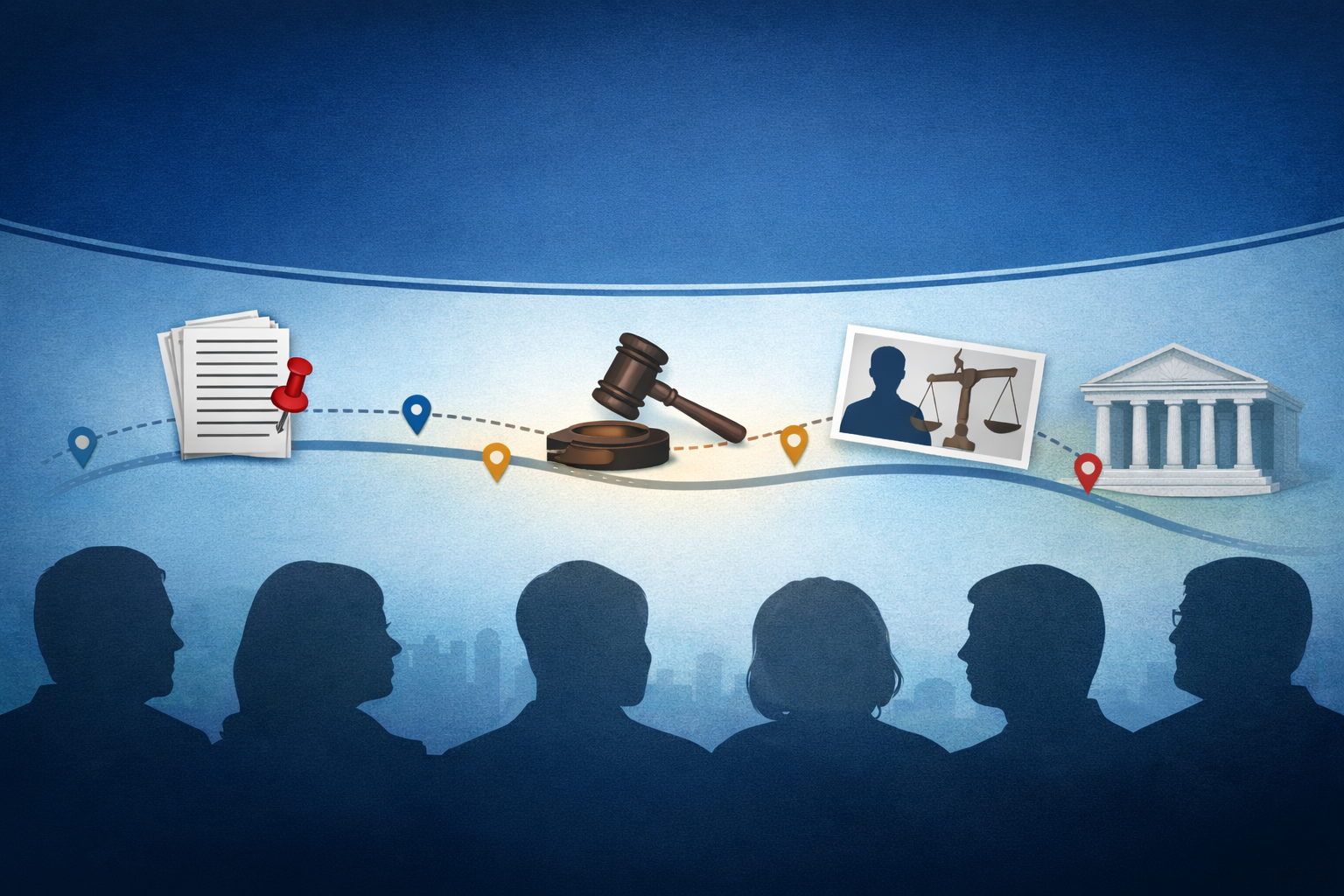

Turning Case Facts into a Persuasive Trial Narrative

Winning at trial is rarely about who has more facts. It’s about who tells the better story.

Judges and juries are not blank slates waiting to absorb raw data. They are human decision-makers who instinctively search for meaning, coherence, and motive. When case facts are presented as disconnected points–dates, documents, testimony excerpts–they compete for attention instead of reinforcing one another. A persuasive trial narrative transforms those same facts into a clear, compelling story that feels inevitable rather than assembled.

This process does not involve embellishment or advocacy masquerading as fiction. It is about structure. When facts are placed in the right order, framed around the right themes, and anchored to human behavior, they become memorable and credible. The difference between confusion and persuasion is often the difference between chronology and narrative.

Facts Are Not the Story–Structure Is

Most cases begin the same way: a pile of information. Emails, contracts, medical records, depositions, police reports, expert opinions. Each item is relevant, yet relevance alone does not create understanding.

Without structure, facts overwhelm. Jurors struggle to determine what matters, what caused what, and why any of it should lead to a particular outcome. The human brain processes stories far more efficiently than lists. Stories provide causation, context, and consequences. They answer three essential questions:

  1. What happened?
  2. Why did it happen?
  3. Why does it matter?

A trial narrative is the framework that allows those questions to be answered consistently from opening statement through closing argument.

Begin With the Ending in Mind

Every persuasive narrative starts with a destination. Before organizing facts, trial teams must be clear on the ultimate conclusion they want the jury to reach. Liability, intent, negligence, breach, damages–these are not just legal elements. They are narrative milestones.

Ask yourself: If a juror were explaining this case to a friend after trial, what would they say?
That imagined explanation should guide the narrative arc.

When the ending is clear, fact selection becomes strategic rather than exhaustive. Not every fact deserves equal attention. Some facts explain motivation. Others establish causation. Some exist primarily to support credibility. Understanding the purpose of each fact prevents clutter and keeps the story focused.

Identify the Core Theme

Every strong trial narrative has a theme–a simple, repeatable idea that explains the case in human terms. Themes are not slogans, but they should be clear enough to be summarized in a sentence.

Examples include:

  • “This was a preventable decision.”
  • “Shortcuts created long-term harm.”
  • “Warnings were ignored.”
  • “Promises were broken when accountability mattered most.”

The theme acts as a filter. Facts that reinforce it move to the foreground. Facts that distract from it are minimized or excluded. Throughout trial, jurors unconsciously test new information against the theme. When facts align with it, credibility increases.

Chronology Creates Comprehension

People understand events best when they are ordered in time. Chronology establishes cause and effect and allows jurors to track decisions as they unfold.

However, chronology alone is not enough. Simply listing events by date risks turning the narrative into a calendar rather than a story. The key is selective chronology–grouping events into meaningful phases and emphasizing turning points.

This is where a well-constructed legal timeline becomes invaluable, not as a visual aid alone, but as a thinking tool. When attorneys can see the sequence of events clearly, patterns emerge: delays, missed opportunities, repeated warnings, escalating risks. Those patterns are what transform chronology into persuasion.

Focus on Decisions, Not Just Events

Stories revolve around choices. Jurors are far more engaged by decisions than by occurrences.

Instead of saying, “The report was not reviewed,” say, “Despite receiving the report, the decision was made not to review it.”
Instead of, “The policy was not followed,” say, “The team chose speed over compliance.”

Framing facts around decisions introduces accountability without argument. It allows jurors to assess reasonableness on their own. Each decision becomes a moment where a different outcome was possible–and where responsibility becomes clear.

Humanize the Narrative

Even in highly technical cases, the narrative must remain human. Corporations act through people. Systems fail because individuals make choices within constraints. Plaintiffs experience harm in personal ways, not abstract categories.

Humanization does not mean emotional manipulation. It means grounding facts in lived experience:

  • What information did someone have at the time?
  • What pressures influenced their choice?
  • What consequences followed for real people?

When jurors can place themselves into the timeline–understanding what was known, what was uncertain, and what was at stake–the story gains credibility.

Integrate Evidence Seamlessly

Evidence should feel like a natural part of the story, not an interruption. Documents, testimony, and exhibits should appear at the moment they matter most in the narrative.

For example:

  • Introduce a critical email at the point when a warning was ignored.
  • Use deposition testimony when a witness’s credibility becomes relevant.
  • Present expert opinions after the factual foundation is established.

When evidence is aligned with narrative beats, jurors remember both the story and the proof supporting it.

Anticipate and Address Weaknesses

A persuasive narrative does not pretend weaknesses do not exist. Instead, it acknowledges them within the story.

When jurors encounter a damaging fact unexpectedly, it disrupts trust. When that same fact is framed early, explained honestly, and placed in context, its impact is reduced. Addressing weaknesses proactively signals confidence and transparency.

The narrative should answer not only why your version is correct, but why alternative interpretations fall short.

Maintain Consistency Across Trial Phases

A trial narrative is not limited to opening statements. It should remain consistent through witness examinations, evidentiary presentations, and closing arguments.

Each phase should reinforce the same structure:

  • The same key events
  • The same decision points
  • The same theme

Consistency builds familiarity. Familiarity builds trust. By the time of closing argument, jurors should feel like they already understand the story–they are simply being asked to confirm what they have seen all along.

Technology as a Narrative Ally

Modern trial teams increasingly rely on technology to manage complexity. When used correctly, digital tools do not replace storytelling; they enhance it.

Organizing facts, witnesses, and exhibits within a coherent structure allows attorneys to focus on persuasion rather than retrieval. When the story is clear internally, it becomes clearer externally.

The most effective tools are those that mirror how stories work–connecting people, events, and evidence in a way that reflects cause and effect rather than isolated data points.

Conclusion: Story Is Strategy

Turning case facts into a persuasive trial narrative is not an aesthetic exercise. It is a strategic one. Structure determines understanding. Understanding determines belief. Belief determines outcomes.

The strongest trial narratives do not rely on theatrics or oversimplification. They rely on clarity, consistency, and human logic. When facts are organized around decisions, themes, and consequences, jurors are not asked to work harder–they are guided naturally toward the conclusion the evidence supports. In the end, the story you tell is not separate from the case.
It is the case–seen clearly, understood fully, and remembered when it matters most.

Making Complicated Medical Histories Easy with Timelines

In personal injury cases, proving how an accident caused medical conditions requires a clear and structured record. A medical chronology organizes a patient’s medical records by date, creating an easy-to-follow timeline of medical events.

Without a well-prepared medical chronology, attorneys may struggle to extract essential information from voluminous medical records.

By highlighting only what matters, a chronology simplifies case preparation and strengthens legal arguments.

This article will explain how medical chronologies support personal injury cases, what they include, and how they improve case outcomes.

Don’t let disorganized medical records slow down your case—book a demo with TrialLine to simplify and strengthen your legal strategy!

Continue reading “Making Complicated Medical Histories Easy with Timelines”

How a Case Chronology Can Help Attorneys Win

Winning a case depends on how well attorneys organize facts, track key dates, and connect events. By creating a case chronology, legal professionals can identify patterns in evidence, highlight gaps, and prepare stronger cases.

Law firms rely on case chronology software to manage case information, review documents, and prepare for trial.

Without an accurate timeline, they risk missing key facts or failing to recognize disputed facts that can impact case outcomes.

In this article, you will learn how a case chronology can improve legal case preparation, enhance communication, and provide a deeper analysis of legal issues.

Stay Organized, Stay Ahead – Build Your Case Chronology with TrialLine!

TrialLine case chronology

Why Build a Case Chronology?

A case chronology helps attorneys to:

Organize Facts to Strengthen Legal Strategy

A case’s strength depends on how well its facts are arranged and understood.

Writing down key information helps attorneys see connections they might have missed. By putting facts and events in a clear timeline, they can focus on what matters most and avoid distractions.

This process also makes it easier to identify patterns in evidence. When attorneys review the legal timeline, they may notice recurring details that support their arguments.

Recognizing these patterns early leads to better preparation, whether for court hearings, depositions, or settlement discussions.

Identify Case Strengths, Weaknesses, and Evidence Gaps

Every case has strong and weak points. A case chronology highlights where the case is strongest and where additional evidence or witness testimony is needed.

Attorneys can review source documents, analyze underlying evidence, and fill in missing details before trial. If a particular legal issue lacks support, they can focus on gathering more documents or interviewing witnesses to fill in the gaps.

Missing information during the discovery phase can delay or weaken a case. A legal timeline helps lawyers identify what’s missing before it’s too late.

Tracking disputed facts also ensures they are addressed before trial, reducing surprises in court.

TrialLine view sharing

Improve Collaboration Across Your Legal Team

Legal teams work more efficiently when everyone has access to the same case information.

A shared case chronology keeps the legal team on the same page. It allows them to track updates, add notes, and discuss events without confusion.

When lawyers work on complex cases, having a structured legal timeline prevents miscommunication. It also makes onboarding easier when new team members need to get up to speed quickly.

Enhance Communication with Clients, Courts, and Opposing Counsel

Attorneys must explain their cases clearly, whether speaking to a client, presenting in court, or negotiating with opposing counsel. A case chronology helps break down complex information into a simple, organized format.

Clients can better understand their cases when attorneys present a clear case narrative. Judges and juries can follow arguments more easily when evidence is laid out in a logical order.

Even in settlement discussions, a strong legal timeline helps lawyers make persuasive arguments backed by key evidence.

Best Practices for Building an Effective Case Chronology

Attorneys need a system that organizes key facts, connects evidence, and makes it easy to track litigation events. Understanding the core concepts of creating a case chronology ensures that all information is clear and accessible when needed.

Start Your Case Chronology Immediately

Waiting too long to create legal timelines can lead to missed details and confusion.

Attorneys should begin tracking facts and events as soon as they take on a case to ensure that all key information is documented in real time.

An early start also improves case management throughout the case lifecycle:

  • Better organization – Legal teams can structure information from the beginning, preventing last-minute scrambling.
  • Ongoing updates – A case chronology should evolve as new evidence emerges, keeping all details in one place.
  • Stronger case report – By maintaining a continuous legal timeline, attorneys can present a clear and well-supported argument.
  • Fewer inconsistencies – Tracking events as they happen reduces the chance of conflicting details later.

Use Advanced Tools Over Basic Word Processors

Some attorneys use simple Word documents or spreadsheets to track case details.

However, these tools lack advanced features for managing case chronology, organizing records, and linking particular witnesses to related events.

Timeline software, such as TrialLine, provides a more effective way to structure and analyze a case. It:

  • Organizes documents – Stores, sorts, and accesses documents without digging through scattered files.
  • Filters by date range – Allows attorneys to focus on specific periods relevant to the case.
  • Uses document review tools – Reviewing and tagging evidence is faster and more organized.
  • Visualizes the case chronology – Instead of reading through lengthy files, legal teams can analyze the timeline in an interactive format.

Take Control of Your Case Facts – Try TrialLine for Smarter Legal Timelines!

Ensure Thorough and Detailed Fact Entries

A case chronology is only useful if it contains clear, well-documented details. Attorneys should:

Include facts with accurate dates and locations.

Case chronology example: motorcycle collision

  • Attach supporting documents to verify claims.

Case chronology example: attaching documents

  • Add internal notes to explain connections between events.

Case chronology example: Event connector

  • Use tags to categorize issues, witnesses, and evidence.

Case chronology example: witness report

Account for Unknown and Disputed Information

Not all case details are clear from the start. A case chronology is not just a record of known facts. It also highlights what still needs to be proven.

Marking uncertain entries and tracking missing evidence helps attorneys stay focused on gathering the right information.

Attorneys should:

  • Assign date ranges when exact dates are unknown.

TrialLine create new event

  • Clearly label disputed facts for easy reference during case preparation.

TrialLine labeling documents

Optimize Depositions with a Structured Chronology

Depositions affect court case outcomes. By linking witnesses to specific facts in a legal timeline, attorneys can:

  • Create witness-specific views for targeted questioning.
  • Cross-check testimony against source documents and prior statements.
  • Update the case chronology after depositions to refine legal strategy.

TrialLine tag management

Maintain a Consistent Naming System

Attorneys handle large amounts of data, including documents, witness statements, and legal filings. Without a clear naming system, information can get lost, misfiled, or confused.

To keep the case chronology organized:

  • Use standardized names for people, organizations, and evidence.
  • Apply consistent tags to categorize legal issues and key dates.
  • Create a structured system for labeling documents and linking them to relevant events.

Draft Accurate Case Chronology with TrialLine

trialline

TrialLine helps attorneys manage and present cases with a structured, event-based timeline.

It allows legal professionals to create clear, customized timelines that outline case details step by step. Events are displayed in an organized format, giving a full view of how a case unfolds.

With TrialLine, you can also store and organize large amounts of case materials, including documents, images, videos, and other important records.

When everything is categorized logically, it is easy for you to retrieve, review, and present when needed.

Don’t Just Track Facts – Build a Case-Winning Chronology with TrialLine!

FAQs About Case Chronology

What is the chronology of a case?

A case chronology is a timeline that organizes key facts, legal events, and important dates. It helps attorneys track witness statements, evidence and disputed facts to analyze a case and prepare for court.

How to write a chronology?

Start by gathering court filings, witness statements, and key documents. Arrange facts and events in order, noting key dates and legal issues. Using case chronology software helps organize, attach evidence, and update details as needed.

How do you write a court case timeline?

List key dates, facts, and evidence in order. Include case filings, hearings, depositions, and trial dates. Link witness statements and disputed facts to specific events. Case chronology software makes it easier to manage and update.

How to write a summary of events for a lawyer?

List key dates, facts, and evidence in order. Keep it clear and concise, focusing on witness statements, legal issues, and disputed facts. A well-structured summary helps attorneys prepare for court, depositions, and negotiations.

The Impact of Medical Chronologies on Malpractice Cases

Healthcare professionals are bound by their duty to avoid causing harm. When a physician fails to meet the required standard of care, skill, or diligence, leading to injury or harm to the patient, it constitutes actionable malpractice.  Continue reading “The Impact of Medical Chronologies on Malpractice Cases”